OpenFPGA Consortium Incorporates, Names Board of Directors
The OpenFPGA Consortium has announced that it has become an incorporated non-profit organization.

The OpenFPGA Consortium has announced that it has become an incorporated non-profit organization.
ECom-Ohio today released its statewide and regional assessments of Ohio's readiness for electronic commerce. At the event, key leaders in government, education and industry unveiled action agendas designed to help Ohio lead in the coming e-commerce revolution. The action agendas require key industry, infrastructure and educational changes to be made at both the state and regional levels.
 Just like trends in clothing, cars change their look and design rapidly with the times.
In recent years, the number of pickup trucks, passenger vans, and sport utility vehicles seen on US highways has grown substantially. Recent crash testing by the Federal Highway Administration indicates that these types of cars may be more prone to overturn when crashing into guardrails on US highways.
Why does a second Internet need to be created? Ask 10 researchers and policymakers across the nation and you may receive 10 different answers. One important answer lies in the health and well-being of Americans.
Many advances in medicine depend on advances in technology, including virtual reality, computer simulations, and a faster Internet. Researchers at the Ohio Supercomputer Center (OSC) in Columbus will demonstrate their recent work at the Spring Internet 2 (I2) Member meeting in Washington, DC, April 14-18.
A Presentation for Medicine Meets Virtual Reality III
San Diego, California
January 19-22, 1995
John S. McDonald, Department of Anesthesiology
The Ohio State University Hospitals
Louis B. Rosenberg, Immersion Corporation
Don Stredney, Ohio Supercomputer Center
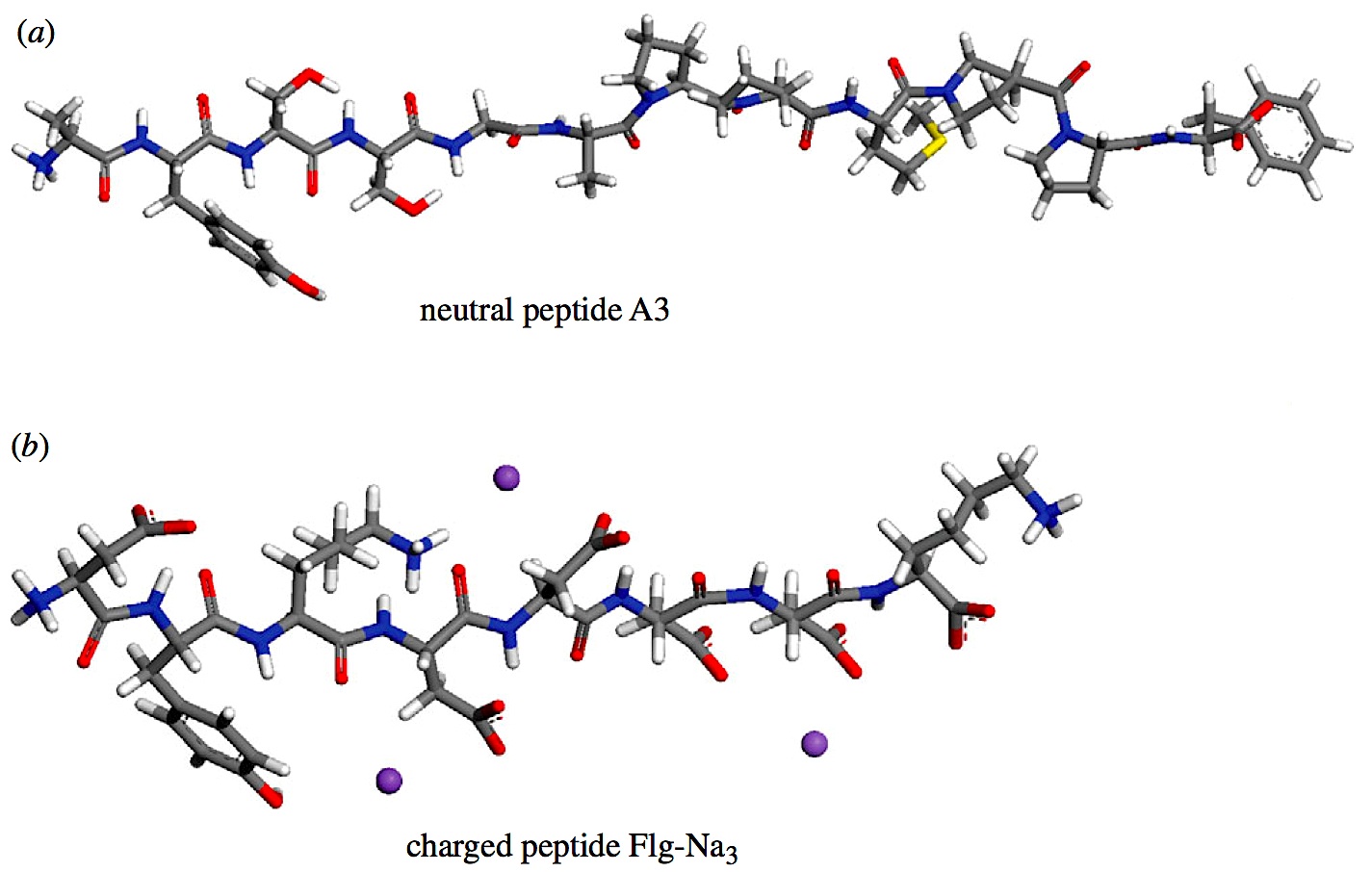
A University of Akron researcher is creating sophisticated computer simulations at the Ohio Supercomputer Center to help understand how “misfolded” proteins in the brain contribute to degenerative disorders, such as Alzheimer’s disease.
 |
|
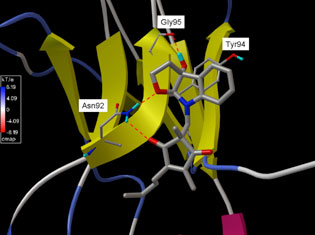
A simulation created at the Ohio Supercomputer Center by Ohio State’s Chenglong Li, Ph.D., illustrates MDL-A (ball-and-stick) binding with a section of GP130 (yellow ribbon). |
An Ohio State University molecular biologist leveraged a supercomputer to help better define the family tree of a group of enzymes that have been implicated in a wide range of human diseases and are important targets for anti-cancer therapies.
Along with several OSU colleagues, Rebecca S. Lamb, Ph.D., an assistant professor of Molecular Genetics, recently analyzed the evolutionary history of the poly(ADP-ribose)polymerase (PARP) superfamily.